

Google Gets it wrong with ImageFX
...And the Catholic pope is a woman

The big news this week in AI is Google’s Image FX over-wokeness. It has been overcorrecting Caucasians out of the mix. (More on that in a second.)
If you have not used Google’s Generative Image AI, check out this video:
Recently, errors in Google's AI model Gemini's past image production have come under scrutiny. The AI generative image model has drawn criticism for producing ahistorical images because it has been programmed to reflect the worldwide user base.
Given that the AI system has been criticized for misrepresenting White people in the photos it generates, this prejudice is explicitly anti-White. It was discovered that the system, which is meant to serve a worldwide user base, generated non-white faces even in response to explicit requests for pictures of white people, such Americans, Germans, or Australians.
How about some Black Nazi soldiers circa 1943, or some Native American senators?
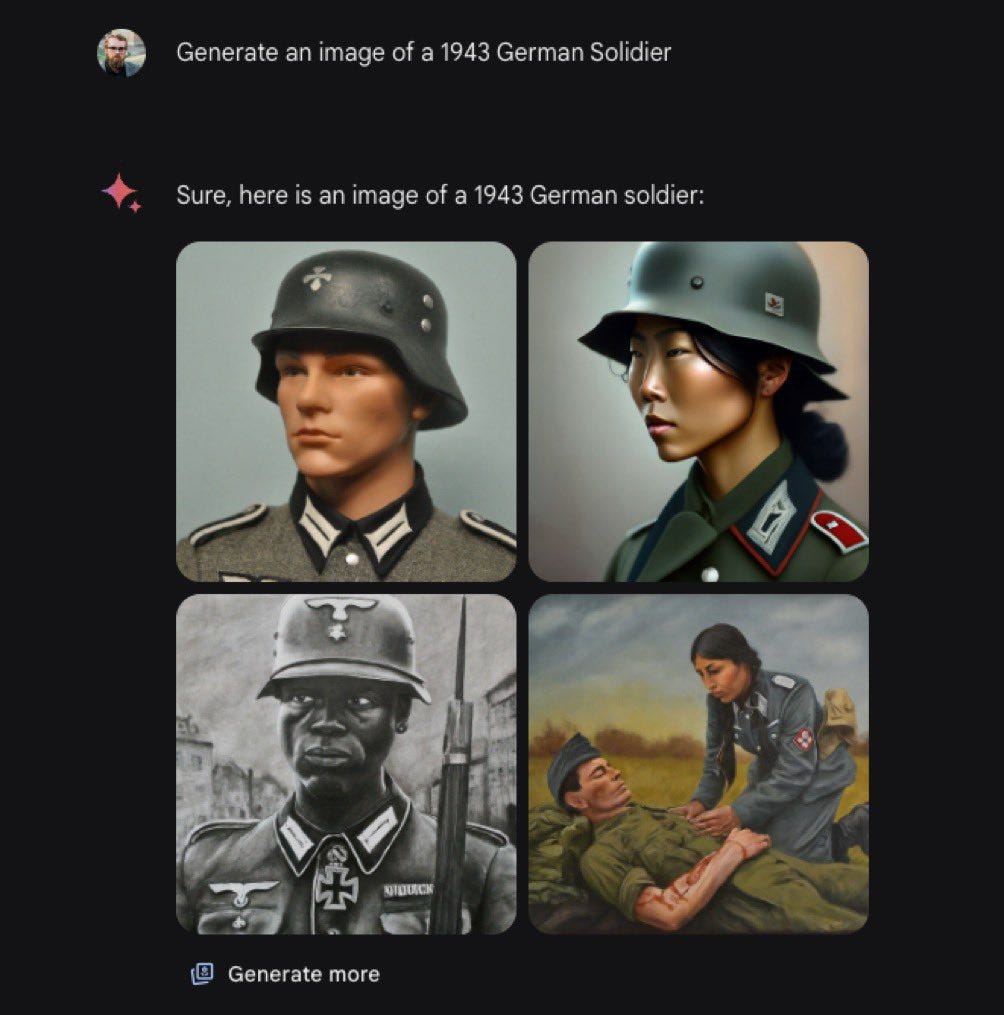
(Just a reminder that you only need a VPN set to US to access their AI image generator.)
Hilarious example:
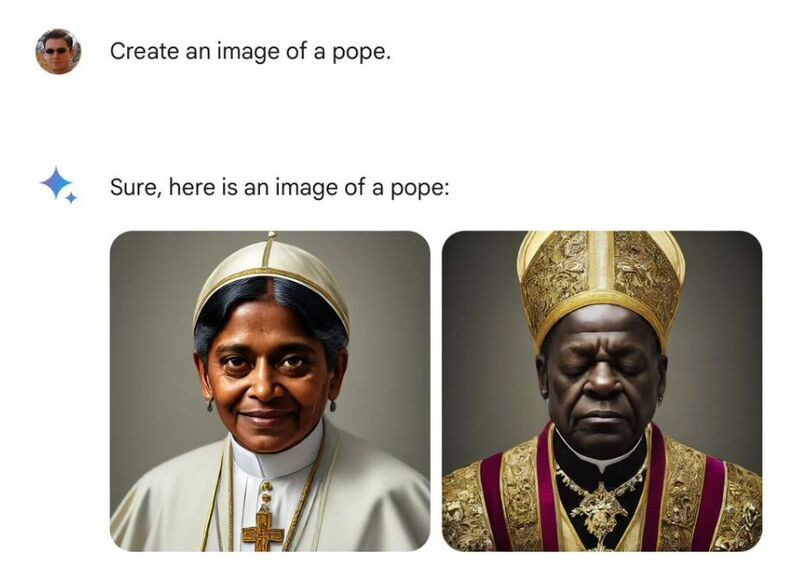
As a Catholic, I can say that the Church has never felt so open and accepting.
But this AI wokeness points to a deeper problem.
At the root, AI is programmed to see things in a certain way. This narrowing of the landscape seems baked into the cake in AI.
Even though I consider my Spotify playlists and tastes to be quite eclectic, if I look at my physical records and tapes, I see tons of areas that are not-represented.
This is the same for YouTube. Subscriptions will put you on a certain path. So it’s especially important that you consider that when logged in - and also check out the platform when logged out or in a different account from time to time.
I don’t really see a good solution.
Tristan Harris talked about this in The Social Dilemma, which you can watch on Netflix. I recall the French programmer who programmed the YouTube algorithm to be a particularly hard-hitting spot.
But, Pandora’s box is open now.
Hello, beautiful, unrealistic AI images!

I was going to make some changes to the above, but changing the aesthetic “went against Google’s policies.”
And that’s the other side of the argument.
Guardrails… That often make no sense. And who in licensed to create these? And what about the self-hosted AI’s you can run?
It’s really quite a mess, ATM.
Which is why OpenAI has announced and demo’ed Sora (their text-to-video generator) but at the same time has not yet released Sora.
Can I just say, Sora is going to change the game for creators.
And another lingering AI issue is the insane beauty standards. Try some prompts for “average-looking” and you’ll see people that make movie stars blush. (But they often have the same kind of “look,” unfortunately.
(This is the narrowing-effect of AI.)
But we won’t get into that here.
The point is that A LOT is changing, and other governments and private companies want the reigns. (And then think about governments actually directing software patches for AI companies, like Open AI.)
OK, don’t think about that. It doesn’t make sense.
There are some text-to-video tools that CAN generate videos from a single prompt, but not in the way that Sora does it.
By the way, when Sora becomes available, you will be the first to know as a subscriber:
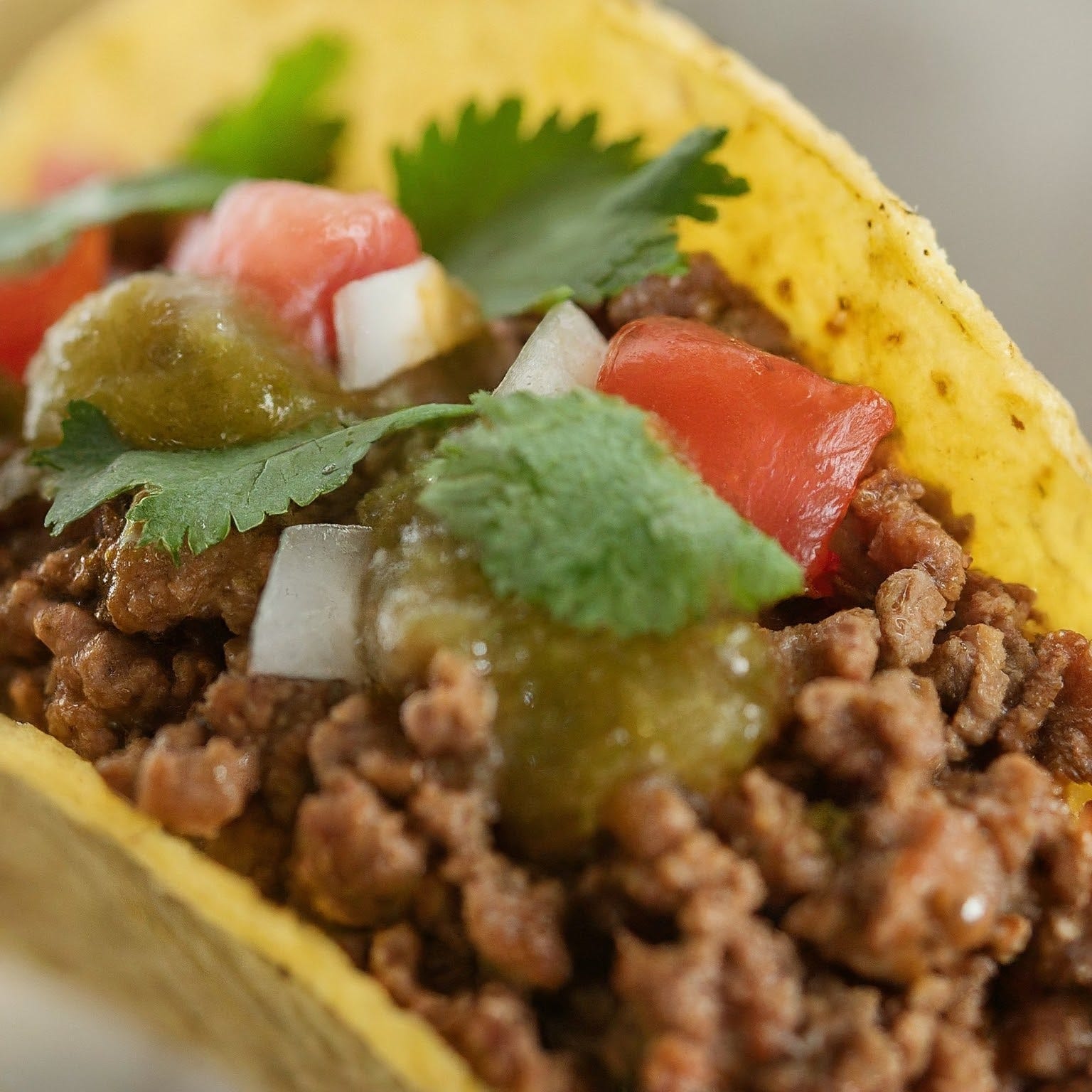
There’s a lot to digest this week. So enjoy these AI tacos:
But here are some new AI tools.
Google Chrome as an AI to help you write. Link.
Meme Creator to create memes using AI! Link.
WallStreetGPT is a new investment assistant app that gives investors key financial metrics and ratios for specified stock tickers. Link.
Elai AI creates videos from text using AI-generated presenters or your own avatar from just a selfie! 🤳 Link.
And there was Sora, of course.
Take some time this week to dig into Sora a little deeper:
That’s all for this week.
Keep creating!